3 Best ASO Ankle Support Brace Picks for Sprains and Sports (2026)
Compare three ASO ankle support brace options for sprains, sports and recovery. See key specs, pros, cons and how to choose the right lace-up fit for your ankle
 By Graham Fisher
Updated November 22, 2026
 By Graham Fisher
Updated November 2026
Anyone who has rolled an ankle knows how quickly a routine game can turn into weeks of limping. An aso ankle support brace is designed to limit excessive inversion and eversion while still letting you move, jump and cut. The right choice depends on whether you are protecting a healing sprain, guarding an ankle you have rolled before, or looking for light stabilization during practice. In this guide we compare three lace-up options from the Med Spec ASO line and McDavid, using manufacturer specifications, brand reputation and common owner feedback patterns. We did not test these products ourselves, so treat the notes below as a research summary rather than hands-on results. Fit, sizing and the advice of a physician or physical therapist should always come first.
Our Top Picks
Quick Comparison
| Product | Best for | Key feature |
|---|---|---|
| Med Spec ASO Ankle Stabilizer Lace Up Ankle Brace | Sprain recovery and general instability | Bilateral orthopedic support with lace-up closure |
| Med Spec ASO Speed Lacer Ankle Stabilizer Brace | Active workouts and daily wear | Speed lacing for quick on-and-off fit |
| McDavid Lace-Up Ankle Brace | Court and field sports with frequent cutting | Ultralight figure-8 support with side stabilizers |
Med Spec ASO Ankle Stabilizer Lace Up Ankle Brace Sprain Support Black, MD
Med Spec ASO Ankle Stabilizer Lace Up Ankle Brace Sprain Support Black, MD | Ankle Brace for Sprains, Instability, Bilateral Orthopedic Support, Sports Injury Recovery, Men, Women, Teens & Kids. 26401
This model suits players and everyday users dealing with ankle instability or a recent sprain who want a firm, structured brace. Its orthopedic design is aimed at people who need more restriction than a light compression sleeve provides, and it is marketed for recovery from sports injuries across men, women, teens and kids.
Key specs
- Lace-up closure with bilateral (left and right) design
- Black, medium size as listed
- Marketed for sprains, instability and sports injury recovery
Pros
- Structured support suited to ankles that roll repeatedly
- Lace-up system lets you adjust tension across the foot and ankle
- Bilateral design allows fitting on either foot
Cons
- Heavier and more restrictive than soft sleeves, which can feel bulky in shoes
- Requires a careful lacing routine to get the fit right
Med Spec ASO Speed Lacer Ankle Stabilizer Brace Sprain Support Black MD

Med Spec ASO Speed Lacer Ankle Stabilizer Brace Sprain Support Black MD | Orthopedic Speed Lacing Ankle Brace for Men, Women, Teens, And Kids, Bilateral, Workouts, Everyday Ankle Protection. 223614
This version is a good fit for people who want ASO-style stabilization but need to get in and out of the brace quickly, such as active adults and younger athletes who train daily. Owners often describe the speed lacing as the main reason they keep it on for everyday ankle protection.
Key specs
- Speed lacing closure for faster application
- Bilateral orthopedic design
- Black, MD size as listed
Pros
- Quick to put on before practice or workouts
- Suitable for everyday wear, not just game days
- Bilateral design works on either ankle
Cons
- Speed lacing offers less fine-tuned tension control than full manual lacing
- Sizing can run tight for some users; check the size chart carefully
McDavid Lace-Up Ankle Brace for Men & Women
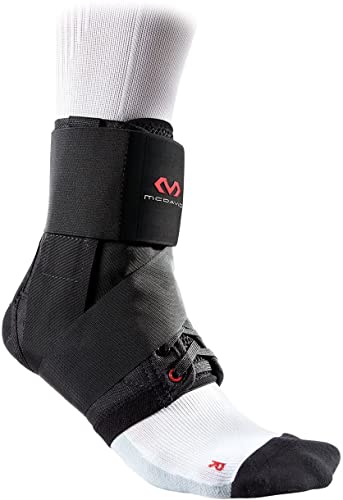
McDavid Lace-Up Ankle Brace for Men & Women, Ultralight Figure 8 Sprained Ankle Support with Side Stabilizers for Sports, Basketball, Soccer, Football, Volleyball, Running
This is the lightest of the three and is aimed at basketball, soccer, volleyball and running players who need support during lateral movement and jumping without giving up mobility. McDavid is a well-known sports medicine brand, and the figure-8 lacing pattern is a common approach for limiting side-to-side ankle motion.
Key specs
- Ultralight construction
- Figure-8 lace-up pattern
- Side stabilizers for lateral support
- Designed for men and women
Pros
- Light enough to wear through a full game or training session
- Figure-8 lacing helps control inversion during cuts
- Fits a wide range of sports listed in its title
Cons
- Less rigid than the orthopedic-style Med Spec models for severe instability
- Lacing takes more time to set up correctly
Buying Guide
Choosing an aso ankle support brace is less about finding the single best model and more about matching the brace to your injury history, sport and daily routine. Start with a clear idea of what you need the brace to do, then check the specific features that deliver it.
Selection Criteria
- Level of support: Orthopedic-style lace-up braces restrict motion more than light sleeves.
- Mobility: Athletes who cut and jump need enough freedom to push off.
- Fit with your shoe: A brace that bunches under a cleat or court shoe can cause blisters.
- Ease of use: If you cannot put it on correctly in under two minutes, you are less likely to wear it consistently.
Important Features
- Closure system: Lace-up gives adjustable tension; speed lacing is faster but less precise.
- Side stabilizers: Rigid or semi-rigid sides help limit lateral rolling.
- Material and weight: Lightweight designs are easier to wear for long sessions.
- Bilateral design: Fits either foot, which can simplify buying and sharing.
Specs to Check
- Shoe size and brace size chart. Brace sizing often follows shoe size but can vary by brand.
- Whether the listing is marketed for sprains, instability or general sport use.
- Whether the brace is designed for left or right specifically or works on both.
Choosing by Need
- Recovering from a sprain or dealing with frequent rolling: Consider an orthopedic-style lace-up brace with structured sides.
- Daily training with quick application: A speed-lacing design can save time.
- Court or field sports with heavy cutting and jumping: A light figure-8 brace with side stabilizers often balances support and mobility.
Things to Watch Out For
- Do not wear a brace so tight that it cuts circulation. Toes that turn cold or numb mean it needs loosening.
- A brace is not a substitute for rehabilitation. Strength and balance work reduce re-injury risk.
- Replace worn-out braces. Stretched straps and collapsed padding lose support.
For more context on sport-specific fit, see Sport Ankle Support Brace Compared: 6 Best Picks for Every Need (2026) and 6 Best Basketball Ankle Support Brace Picks for Court Play (2026). If you are dealing with a recent injury, Athletic Ankle Support Brace: 5 Best Picks for Sprains and Sports covers recovery-focused options.
FAQ
Is an aso ankle support brace the same as a compression sleeve?
No. Compression sleeves mainly provide warmth, light compression and proprioceptive feedback. Lace-up braces with side stabilizers are designed to restrict excessive ankle motion more directly. Many people use both at different stages of recovery.
Can I wear an ankle brace while playing basketball?
Many players do, and braces are common on the court. Choose a model that fits inside your basketball shoe without pressure points. A brace is a support tool, not a guarantee against injury, so keep up with strength and balance training.
How tight should a lace-up ankle brace be?
It should feel snug and supportive without pinching or numbing your foot. You should be able to wiggle your toes comfortably. If the brace causes tingling, color change or swelling, loosen it and check with a professional.
Should I wear a brace every day?
That depends on your injury status and your provider’s advice. Some people wear braces only for training and games, while others use them for daily activity after an ankle injury. Ask a physician or physical therapist before using a brace long term.
How do I know my brace size?
Use the manufacturer’s size chart and measure around the ankle at the specified point, usually the narrowest part above the ankle bone. Measurements matter more than shoe size alone. For another angle, check out 5 Best Mueller Ankle Support Brace Picks for Sprains and Sports (2026).
How often should I replace an ankle brace?
Replace it when straps stop holding tension, padding flattens or the fabric shows heavy wear. Regular sweat and washing can break down materials over time.
Can kids and teens use these braces?
Some listings specify use for teens and kids, but always confirm the size and check with a pediatric provider or athletic trainer, especially after an injury.
Conclusion
For a recovering or unstable ankle, the Med Spec ASO Ankle Stabilizer Lace Up Ankle Brace offers structured orthopedic-style support. The Med Spec ASO Speed Lacer suits people who want quick application for daily training. The McDavid Lace-Up Ankle Brace is the best fit for court and field players who need lightweight lateral support during cuts and jumps. Whatever you choose, get the sizing right, follow your provider’s guidance and pair the brace with balance and strength work.
Related reading
- Med Spec ASO Ankle Brace: Fit, Support and Basketball Use Guide
- Steph Curry Ankle Brace: 7 Best Picks for Court Support (2026)
- Sprained Ankle Support Brace: 6 Best Picks for Recovery and Play (2026)
- Sports Brace for Ankle: 6 Best Picks for Support on the Court (2026)
- Sports Ankle Brace Soccer: How to Choose and Fit One for Maximum Support
About Graham Fisher
Graham Fisher is part of our editorial team and reviews and edits our basketball endurance & training gear guides, checking product details against manufacturer specifications and owner feedback.
About the author
Graham Fisher writes reviews and buying guides for Basketball Marathon.