3 Best McDavid Ankle Support Brace Picks for Court and Field (2026)
Compare three McDavid ankle support brace options for basketball, soccer and running. Learn the key features, fit tips and which model suits your ankle needs.
 By Graham Fisher
Updated November 7, 2026
 By Graham Fisher
Choosing a mcdavid ankle support brace comes down to one question: how much stability do you need, and how much freedom of movement can you give up to get it? Players who have rolled an ankle before often want firm lateral support that still lets them cut, jump and sprint without feeling boxed in. Others, especially those returning from a minor sprain, want something low-profile they can wear under a sock during practice. This guide compares three McDavid models from the brand’s ankle lineup, based on specifications, brand reputation and common patterns in owner feedback. We did not test these products ourselves. Our criteria were support style, weight and profile, closure system, sport suitability and how well each design matches the way athletes typically describe their ankle needs. If you have a history of recurring sprains or a diagnosed ligament injury, check with a physician, athletic trainer or physical therapist before choosing a brace.
Our Top Picks
Quick Comparison
| Product | Best for | Key feature |
|---|---|---|
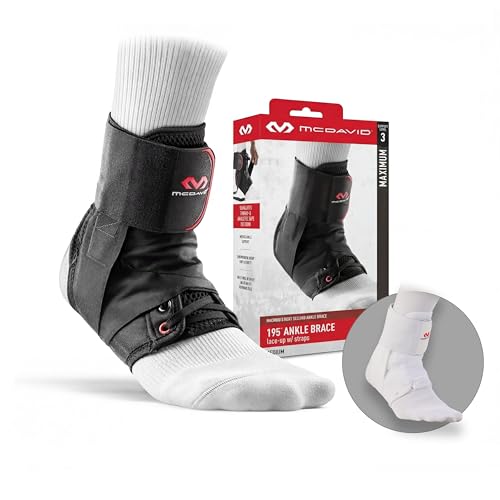
| McDavid Lace-Up Ankle Brace (ASIN B000V413TW) | Players who want adjustable lace-up support across several sports | Figure 8 lacing with side stabilizers |
| McDavid Adjustable Ankle Brace (ASIN B000UVVXPA) | Athletes who need support plus Achilles tendon coverage | Adjustable lace-up wrap with Achilles support |
| McDavid Ankle Brace Low Profile Phantom (ASIN B07X1TSPH5) | Players who want a slim, lace-free brace for basketball | Lightweight, low-profile lace-free design |
McDavid Lace-Up Ankle Brace for Men & Women, Ultralight Figure 8 Sprained Ankle Support
McDavid Lace-Up Ankle Brace for Men & Women, Ultralight Figure 8 Sprained Ankle Support with Side Stabilizers for Sports, Basketball, Soccer, Football, Volleyball, Running
This model suits athletes who want a traditional lace-up feel with a clear, adjustable fit. The figure 8 strapping pattern is designed to limit inversion and eversion while still allowing the foot to move through a natural range. It is a sensible all-round choice for basketball, soccer, football, volleyball and running.
Key specs
- Lace-up closure with figure 8 strapping pattern
- Side stabilizers for lateral support
- Designed for men and women
- Ultralight construction, per the listing name
- Intended for multi-sport use
Pros
- Adjustable lacing lets you tune compression between sessions
- Side stabilizers add lateral control for cutting sports
- Lightweight enough that many players wear it through full practices
Cons
- Lacing takes a few minutes to set correctly, especially on the first wear
- Fit may feel bulkier than lace-free models under tight athletic shoes
McDavid Adjustable Ankle Brace for Women Men, Sprained Ankle Support, Achilles Tendon Support

McDavid Adjustable Ankle Brace for Women Men, Sprained Ankle Support, Achilles Tendon Support, Injury Recovery, Lace Up Ankle Stabilizer Wrap for Running, Basketball, Volleyball, Soccer, Sports
This option fits players who want the same general lace-up support but also need coverage above the heel. The listing highlights Achilles tendon support, which makes it a reasonable pick for runners and athletes who have felt tightness in the lower calf or heel area. Owners often mention it as a recovery-focused option for sprain rehabilitation.
Key specs
- Adjustable lace-up closure
- Achilles tendon support, per the listing name
- Designed for men and women
- Intended for running, basketball, volleyball and soccer
Pros
- Extra coverage for the Achilles area that some single-purpose braces lack
- Adjustable fit works well during the gradual return from a sprain
- Versatile across running and court sports
Cons
- Added coverage can feel warm during long sessions in hot conditions
- Requires careful tension adjustment to avoid pressure points
McDavid Ankle Brace, Low Profile Lace-Free Phantom Ankle Braces

McDavid Ankle Brace, Low Profile Lace-Free Phantom Ankle Braces for Men Basketball and more. Lightweight Design, Advanced Strapping & Flex-Support
This lace-free model is aimed at basketball players and others who want support that stays out of the way. The low-profile design is meant to slide under a sock and sit comfortably inside a court shoe, which makes it popular with athletes who train or play in a tight-fitting sneaker. It suits players with mild instability who do not need the heavier lacing of a full brace.
Key specs
- Lace-free design
- Low-profile construction
- Lightweight design, per the listing name
- Advanced strapping and flex support, per the listing name
Pros
- Slim profile fits inside most court shoes without crowding the toe box
- No laces to retie during games or between quarters
- Flex support allows a more natural ankle motion than rigid designs
Cons
- Less adjustable than lace-up models, so fit depends heavily on correct sizing
- May offer less compression for players with significant instability
Buying Guide
Selection criteria to start with
Before you compare models, decide what problem you are solving. A brace for prevention in a healthy ankle needs different features than one used during return to play. Consider the sports you play most, how often you cut or change direction, whether you have a history of rolling the same ankle, and how much weight you want on your foot during the day. Sport-specific bracing advice is also covered in our guide to Sports Brace for Ankle: 6 Best Picks for Support on the Court (2026), which looks at court-specific needs in more depth.
Important features to compare
- Closure system: Lace-up designs allow fine adjustment. Lace-free designs are faster to put on but depend more on accurate sizing.
- Lateral support: Side stabilizers or figure 8 strapping help control inversion, which is the most common sprain mechanism in basketball and soccer.
- Profile and weight: A slim brace fits better in fitted shoes. A heavier brace may feel more secure but can add warmth and bulk.
- Coverage area: Some designs extend toward the Achilles tendon or calf. Others stay focused on the ankle joint itself.
- Sport suitability: Running braces often prioritize heel and Achilles comfort. Court braces tend to emphasize lateral control.
Specs to check on the listing
Look for the size chart first. Ankle circumference is the most reliable sizing measure, usually taken at the narrowest point just above the ankle bone. Confirm whether the brace is sold for left, right or either foot, and check whether the listing describes the closure type and the intended sports. Avoid relying only on a generic “for sports” claim. Specific wording such as “lace-up” or “lace-free” tells you more about how the brace will feel.
Choosing by need
- Court play with cutting and jumping: Favor lateral support and a secure closure. Lace-up designs with side stabilizers are usually the more predictable choice.
- Running with heel or Achilles discomfort: Look for coverage that extends above the heel.
- Light prevention in a fitted shoe: A low-profile lace-free design can work well if your ankle is stable and you have been sized correctly.
- Recovery after a sprain: Adjustability matters because swelling changes throughout the day. A lace-up brace lets you loosen or tighten as needed.
Things to watch out for
- A brace is not a substitute for rehabilitation. Strength and balance work remain important.
- Tightness that causes numbness, tingling or color change is a sign to loosen the brace immediately.
- Do not assume a brace will prevent every sprain. It reduces risk and improves feedback during movement, but it does not eliminate it.
- Replace worn straps or a stretched closure, since reduced tension changes how much support you get.
For a broader comparison across brands and styles, see Sport Ankle Support Brace Compared: 6 Best Picks for Every Need (2026). If you play soccer, Sports Ankle Brace Soccer: How to Choose and Fit One for Maximum Support covers fit and sizing for that sport.
FAQ
Is a McDavid ankle support brace good for basketball?
Many basketball players choose McDavid braces because the designs focus on lateral control and a fit that works with court shoes. A lace-up model usually offers more adjustability for cutting and jumping, while a lace-free model suits players who want a slimmer profile.
How do I know what size to buy?
Measure ankle circumference at the narrowest point above the ankle bone and compare it with the manufacturer’s size chart. If you fall between sizes, consider how much support you want and how the brace fits your shoe.
Can I wear a McDavid brace for running?
Yes, several McDavid models are marketed for running. If you have heel or Achilles discomfort, a design with Achilles coverage may be more comfortable than a minimal lace-free brace.
Should I wear an ankle brace all day?
Many athletes wear braces during training and competition only. Wearing one all day can reduce the strength and balance benefits of unsupported movement. Ask a physical therapist or athletic trainer how long to wear a brace during your recovery.
Can a brace replace ankle strengthening exercises?
No. A brace supports the joint but does not build the muscles, tendons and balance control that protect the ankle long term. Use the brace alongside a structured strengthening and balance program.
How often should I replace my ankle brace?
There is no universal timeline. Replace the brace when straps stretch, closures no longer hold tension, or padding breaks down. Regular washing according to the manufacturer’s care instructions also helps maintain fit and hygiene.
Are lace-up braces better than lace-free braces?
Neither is better in every case. Lace-up braces allow more fine-tuned compression. Lace-free braces are quicker to put on and often fit more easily under a shoe. The right choice depends on your ankle stability, sport and tolerance for adjustment.
Conclusion
The three McDavid options cover different needs. The Lace-Up Ankle Brace with figure 8 strapping and side stabilizers suits players who want adjustable, multi-sport lateral control. The Adjustable Ankle Brace with Achilles tendon support is a practical choice for runners and athletes who need coverage above the heel. The Low Profile Lace-Free Phantom model fits players with mild instability who want a slim, quick-to-wear brace for basketball. Match the brace to your sport, your history of ankle problems and the fit of your shoes, and check with a medical professional if you are recovering from an injury.
Related reading
- Lace Up Ankle Brace Compared: 8 Best Picks for Support and Speed (2026)
- Ankle Support Brace Soccer: How to Choose and Fit One for Play
- Ankle Brace for Twisted Ankle: 10 Best Picks for Support and Recovery (2026)
- Ankle Brace for Running: 5 Best Picks for Support and Comfort (2026)
- 7 Best Ankle Braces for Soccer Players: Expert Picks for Support and Speed
About Graham Fisher
Graham Fisher is part of our editorial team and reviews and edits our basketball endurance & training gear guides, checking product details against manufacturer specifications and owner feedback.
About the author
Graham Fisher writes reviews and buying guides for Basketball Marathon.