Alternative to Agility Ladder: Which Should You Choose? (2026)
Looking for an alternative to agility ladder? We compare cones, hurdles, and resistance tools on footwork, space, cost of setup, and basketball fit to help you
 By basketballmarathon editorial team
Updated November 7, 2026
As an Amazon Associate I earn from qualifying purchases. This page may contain affiliate links.
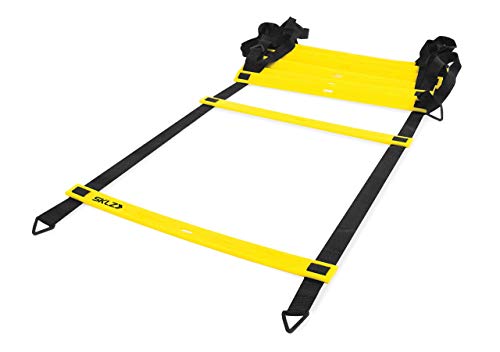
If you want a substitute for an agility ladder, the best choice depends on what you are trying to build. Players who need flat, repeatable footwork in a small space often do well with a set of agility cones or a mini hurdle set. Athletes who want to add lateral resistance and strength alongside quickness may prefer a resistance band or a sliding-disc setup. This comparison looks at the main options side by side so you can match the right alternative to agility ladder work to your training goals.
Quick Comparison: Agility Ladder vs. Common Alternatives
| Criterion | Agility Ladder | Agility Cones | Mini Hurdles | Resistance Bands |
|---|---|---|---|---|
| Footwork pattern variety | High | High | Moderate | Low |
| Space needed | Long, narrow strip | Flexible, any shape | Short line | Very little |
| Setup time | Moderate | Fast | Fast | Fast |
| Foot speed emphasis | Strong | Strong | Moderate | Weak |
| Lateral strength work | Limited | Limited | Moderate | Strong |
| Court-specific cuts and changes of direction | Good | Excellent | Good | Limited |
| Portability | Good (rolls up) | Excellent (stacks) | Good | Excellent |
Footwork Pattern Variety: Which Option Wins?
An agility ladder is built around the idea of stepping quickly through a grid, so it gives you forward, lateral, and diagonal patterns with very little thinking about layout. Cones offer nearly the same range of patterns because you can place them in any arrangement, including the shuttle, T-drill, and five-cone drill that many coaches use. Winner: agility cones, because you control the spacing and can build patterns that match actual basketball movement, such as a close-out followed by a slide.
Space Requirements: Which Option Fits a Small Area?
Most standard ladders run roughly 15 to 30 feet long, depending on the model and the number of rungs, and they need a flat, clear strip. A garage floor or a single baseline can work, but a wide driveway is more comfortable. Cones and resistance bands take up far less room, and they can be set up in a sideline corridor or a half-court area. Winner: resistance bands for tight spaces, with cones a close second.
Setup Time and Ease of Use: Which Option Is Quickest?
A ladder must be laid out so the rungs are evenly spaced and do not slide when you step on them. Anchoring it to the floor with tape or using a model with a rigid frame helps. Cones are typically faster to place because each marker is independent. Mini hurdles set up in seconds and give you a clear visual target. Winner: agility cones and mini hurdles, which both allow a full session to begin within a couple of minutes.
Foot Speed and Quickness Development: Which Option Builds It Best?
The ladder remains a strong tool for foot speed because the rungs force short, rapid ground contacts. Many coaches recommend one to two sets of 20 to 30 seconds of fast feet on a ladder before moving to other drills. Cones can produce similar results if you keep the distances short, around 3 to 5 yards between markers, and push the pace. Hurdles tend to build more deliberate step height and rhythm than pure speed. Winner: agility ladder, narrowly, because its dense layout produces the most ground contacts per minute.
Strength and Lateral Power: Which Option Adds More?
Neither a ladder nor cones add much resistance, so they mainly train coordination and quickness. Resistance bands fill that gap. Looping a band around the hips or ankles and performing lateral shuffles, monster walks, and lateral lunges builds the hip abductor and glute strength that supports defensive slides. Mini hurdles with lateral hops also add some power work. Winner: resistance bands, for players who want to strengthen the muscles that a ladder alone does not load.
Basketball-Specific Movement: Which Option Transfers Best?
Basketball rarely involves stepping through a grid. Players change direction off one foot, shuffle along a baseline, and accelerate after a stop. Cones are the most adaptable here, since you can place them to mirror a defensive slide along the three-point line or a closeout from the wing. Ladders are useful for footwork rhythm but must be paired with cone work to replicate real court angles. Winner: agility cones, with the ladder working best as a warm-up supplement.
Portability and Storage: Which Option Is Easiest to Carry?
Ladders usually roll or fold into a bag, which makes them manageable for travel. Cones stack compactly and are easy to toss into a gym bag, though a full set adds some bulk. Resistance bands are the most compact of all and can fit in a jacket pocket. Winner: resistance bands, followed closely by cones.
Which Should You Choose?
- Choose an agility ladder if you want dense, rapid foot-speed work and have a long, flat strip to use. It remains a strong option for beginners learning rhythm.
- Choose agility cones if you want court-specific movement, flexible layouts, and the closest match to real basketball cuts and slides.
- Choose mini hurdles if you want to develop step height, rhythm, and quick feet in a short space, especially for younger athletes.
- Choose resistance bands if your priority is lateral strength and hip stability in a very small area, or if you travel often and need the lightest kit.
- Combine tools if you can. Many players get the best result from a ladder for rhythm, cones for court movement, and bands for strength, rotated across the week.
Here are options to explore for each tool type:
- Agility ladder: View on Amazon
- Agility cones: View on Amazon
- Mini hurdles: View on Amazon
- Resistance bands: View on Amazon
For more detail on structuring ladder-based sessions, see Top 7 Agility Ladder Drills for Beginner's to Build Foot Speed and Ladder for Agility Drills: 12 Drills to Build Footwork and Quickness. If you are weighing whether a ladder is worth buying at all, Does Agility Ladder Work? What It Builds and What It Doesn't covers its real limits. Players who want cone-based basketball drills can read Agility Ladder with Cones: A Step-by-Step Drill Guide for Basketball.
FAQ
Can cones fully replace an agility ladder?
For most basketball players, yes. Cones allow a wide range of patterns and better match court movement. The main thing a ladder offers that cones do not is a dense, consistent rung layout that trains rapid, short ground contacts. If you use cones, keep the spacing tight enough to challenge your foot speed.
Are mini hurdles good for beginners?
Yes. They teach foot placement and rhythm and are easy to set up. Beginners should start with low heights, often around 4 to 6 inches, and focus on quick, light steps before increasing speed.
Do resistance bands improve agility?
Indirectly. Bands build the lateral strength and hip stability that support quick direction changes. They do not train the rapid footwork pattern that a ladder or cones develop, so they work best alongside another tool.
How often should I train with an alternative to agility ladder?
Two to three footwork sessions per week is a common starting point for most players, with 10 to 20 minutes of focused work per session. Adjust based on fatigue, recovery, and your season schedule. Players with joint concerns or existing injuries should consult a physical therapist, athletic trainer, or physician before adding new high-intensity drills.
Which alternative is best for a small apartment or garage?
Resistance bands and a compact set of cones are the most space-efficient. Both can be used in a small area and stored easily. A short line of mini hurdles can also fit in a limited space.
Conclusion
There is no single alternative to agility ladder that beats every other option in all categories. Agility cones offer the best court transfer and flexibility, resistance bands add strength in tight spaces, and mini hurdles build rhythm for beginners. For most basketball players, a mix of tools will give the most complete training. Start with the option that matches your current weakness, track your progress over several weeks, and adjust your setup as your footwork improves.
Related reading
About the author

basketballmarathon editorial team writes reviews and buying guides for Basketball Marathon.