Top 6 Side Step Agility Ladder Picks for Basketball Footwork
Compare six side step agility ladder options for basketball footwork, with specs, pros, cons and who each one suits best before you buy.
 By Colin Foster
Updated November 12, 2026
 By Colin Foster
Updated November 2026
Shopping for a side step agility ladder can feel more confusing than it should. Most listings promise faster feet, better lateral quickness and sharper footwork, but the differences between models come down to rung spacing, ladder length, frame style and whether the ladder lies flat or sits raised off the ground. This guide covers six options that suit different training setups, from a flat speed ladder for a driveway to a raised net for footwork drills on a gym floor. Each pick was chosen by comparing manufacturer specifications, brand track record and the patterns owners tend to mention in feedback, and the criteria are listed in the buying guide below.
Our top picks at a glance
- 1TOP CHOICEBest overallSoulchen Elevated Agility Training Net, 16 Grid High Step Agility LadderView on Amazon
- 2
 TOP CHOICEBest for full-body conditioning bundlesAgility Ladder Speed Training Equipment Set, 20ft 12-StepView on Amazon
- 3
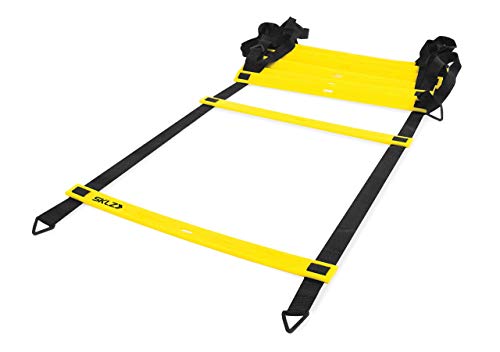 TOP CHOICEBest for flat, outdoor footworkSKLZ Quick Ladder Running-equipment, 15-FeetView on Amazon
- 4
 Best for a sturdy step platformHBTower Step Ladder, Folding Step StoolView on Amazon
- 5
 Best for heavy-duty durabilityLittle Giant Ladders, Sure Step, 3-Step Double-Sided Step StoolView on Amazon
- 6
 Best budget pickOne-Piece Silicone Agile LadderView on Amazon
Our Top Picks
Quick Comparison
| Product | Best for | Key feature |
|---|---|---|
| Soulchen Elevated Agility Training Net, 16 Grid High Step Agility Ladder | Raised high-step footwork | 16 grid openings with four stretchable ropes |
| Agility Ladder Speed Training Equipment Set, 20ft 12-Step | Full-body conditioning bundles | 20 ft ladder with resistance bands and cones |
| SKLZ Quick Ladder Running-equipment, 15-Feet | Flat outdoor footwork | 15 ft flat ladder for lateral and forward drills |
| HBTower Step Ladder, Folding Step Stool | Sturdy step platform work | Wide anti-slip pedal and folding steel frame |
| Little Giant Ladders, Sure Step, 3-Step Double-Sided Step Stool | Heavy-duty, long-term use | 375 lb weight rating, double-sided design |
| One-Piece Silicone Agile Ladder | Budget and indoor/outdoor flexibility | Single-piece silicone, lightweight and portable |
Soulchen Elevated Agility Training Net, 16 Grid High Step Agility Ladder
Soulchen Elevated Agility Training Net, 16 Grid High Step Agility Ladder | Raised Footwork Speed Ladder with 4 Stretchable Ropes, Soccer Football Basketball Speed Training Equipment for Youth & Adults
Best for: Raised high-step footwork and combination drills
This is a good fit for players who want to train knee drive and foot placement at the same time as lateral speed. The raised net design asks you to lift each foot higher than a flat ladder does, which builds the hip flexor strength and rhythm that transfer to quick first steps on the court.
Key specs:
- 16 grid openings
- Four stretchable ropes for securing the net
- Raised, elevated design for high-step drills
Pros:
- Forces higher knee lift than a flat ladder
- Stretchable ropes help keep the net taut on uneven surfaces
- Works across soccer, basketball and general speed training
Cons:
- Raised design can be less stable on slick floors
- Setup takes a few minutes longer than a flat ladder
Bottom line: A strong choice for athletes who want to add high-step work to their footwork routine and have a flat, dry surface to set it up on.
View on AmazonAgility Ladder Speed Training Equipment Set, 20ft 12-Step
Agility Ladder, Speed Training Equipment Set, 20ft 12-Step Agility Ladder with 4 Fixed Steel Spikes, 5 Resistance Bands, 12 Football Cones, Jump Rope, Running Resistance Umbrella for Kids Teens Adults
Best for: Full-body conditioning bundles with added resistance work
Players who want one purchase that covers ladder drills, resistance work and cone-based agility will find this set useful. The 20-foot length gives room for longer sequences, and the included accessories make it easier to build varied sessions without buying each piece separately.
Key specs:
- 20 ft ladder with 12 steps
- Four fixed steel spikes for anchoring
- Includes resistance bands, football cones and a jump rope
Pros:
- Long length supports varied drill patterns
- Bundled accessories cover conditioning and agility work
- Steel spikes help keep the ladder from shifting
Cons:
- Bundle is heavier to store and carry than a single ladder
- Accessories vary in quality, so owners often replace the resistance bands first
Bottom line: Best for players who want a complete training kit in one set and have room to lay out a 20-foot ladder.
View on AmazonSKLZ Quick Ladder Running-equipment, 15-Feet
SKLZ Quick Ladder Running-equipment, 15-Feet US, Yellow
Best for: Flat outdoor footwork and lateral side-step drills
This is a classic flat speed ladder that suits driveways, baseball fields and open gym floors. Its low profile lets you practice side steps, in-and-outs and lateral shuffles without the step height of a raised ladder, which makes it a practical choice for footwork fundamentals.
Key specs:
- 15 ft length
- Flat, lay-down design
- Yellow, high-visibility color
Pros:
- Flat design is easy to set up on most surfaces
- Well-known brand in speed training equipment
- Good visibility for quick pattern changes
Cons:
- Flat rungs can slide on smooth concrete unless anchored
- Lacks the height challenge of raised ladders
Bottom line: A dependable, straightforward option for side-step fundamentals and general footwork practice.
View on AmazonHBTower Step Ladder, Folding Step Stool
HBTower Step Ladder, Folding Step Stool with Wide Anti-Slip Pedal | Sturdy Steel Ladder, Convenient Handrail, Lightweight, Portable Steel Step Stool
Best for: Sturdy step platform work and lateral step-ups
This product is a folding step stool rather than a footwork ladder, but it can serve as a stable platform for lateral step-ups and side-step tempo drills. Players who want a firm, wide surface to step on will appreciate the anti-slip pedal.
Key specs:
- Folding steel frame
- Wide anti-slip pedal
- Convenient handrail
Pros:
- Wide, anti-slip surface for controlled step work
- Folds down for storage
- Steel construction feels solid under load
Cons:
- Not a true agility ladder, so drill options are limited
- Handrail can get in the way during fast lateral movement
Bottom line: A useful add-on for step-up and platform work, but not a substitute for a dedicated footwork ladder.
View on AmazonLittle Giant Ladders, Sure Step, 3-Step Double-Sided Step Stool
Little Giant Ladders, Sure Step, 3-Step, Double-Sided Step Stool, Fiberglass, (11953), Type 1AA, 375 lbs Weight Rating, Hi-viz Green
Best for: Heavy-duty, long-term training platform use
Buyers who want a durable platform for repeated step drills will value the 375-pound weight rating and fiberglass build. Like the HBTower, this is a step stool rather than a footwork ladder, so it fits best as a supporting piece in a training area.
Key specs:
- 3-step, double-sided design
- Fiberglass construction
- 375 lb weight rating (per the listing name)
Pros:
- High weight rating suits heavier users
- Fiberglass resists rust and moisture
- Double-sided design offers two entry points
Cons:
- Bulkier and heavier than a folding stool
- Not designed specifically for agility drills
Bottom line: Best for players who need a rugged, long-lasting step platform and have space to store a larger unit.
View on AmazonOne-Piece Silicone Agile Ladder
One-Piece Silicone Agile Ladder 1 PC Suitable for Sports & Fitness Step Training Soccer Footwork practice Street Dance Step Training Auxiliary Kit for Various Indoor and Outdoor Floor Areas (Red)
Best for: Budget-friendly indoor and outdoor footwork
This silicone ladder is lightweight and portable, which makes it easy to carry to a park or move between training spaces. It suits players who want to practice footwork patterns without committing to a larger, heavier setup.
Key specs:
- One-piece silicone construction
- Lightweight and portable
- Red color
Pros:
- Lightweight and easy to roll up and carry
- Silicone grips floors reasonably well
- Works on indoor and outdoor surfaces
Cons:
- Thinner material can curl at the edges over time
- Less rigid than a rope or steel-frame ladder
Bottom line: A practical, low-commitment choice for players who want simple footwork practice on a range of surfaces.
View on AmazonBuying Guide
Ladder Length and Rung Spacing
Standard speed ladders are commonly listed between about 12 and 20 feet long, and rung spacing typically ranges from roughly 18 to 24 inches. Shorter ladders work for quick in-and-out and side-step patterns, while longer ladders allow you to link several patterns into one session. Choose a length that fits your training area with room to move around the ends.
Good picks for this: SKLZ Quick Ladder Running-equipment, 15-Feet; Agility Ladder Speed Training Equipment Set, 20ft 12-Step
Flat Versus Raised Design
Flat ladders lie on the ground and are best for footwork fundamentals and quick feet. Raised or elevated ladders add a higher step and build knee drive. If you are new to ladder work, start flat and add raised drills once your rhythm is consistent.
Good picks for this: Soulchen Elevated Agility Training Net, 16 Grid High Step Agility Ladder; SKLZ Quick Ladder Running-equipment, 15-Feet
Anchoring and Surface Grip
Ladders that slide on concrete or polished gym floors can disrupt your footwork and create a trip hazard. Look for steel spikes, rubber or silicone backing, or the option to secure the ladder at the ends. Test the grip on your actual training surface before running fast drills.
Good picks for this: Agility Ladder Speed Training Equipment Set, 20ft 12-Step; One-Piece Silicone Agile Ladder
Weight Rating and Stability for Step Work
If you plan to use a step stool or platform for lateral step-ups, check the manufacturer’s weight rating and confirm that the surface is wide enough for your foot. A rating well above your body weight provides a margin for dynamic loading. Always follow the manufacturer’s instructions and keep the platform on a level surface.
Good picks for this: Little Giant Ladders, Sure Step, 3-Step Double-Sided Step Stool; HBTower Step Ladder, Folding Step Stool
Portability and Storage
If you train at multiple locations, weight and folding design matter. Rope and silicone ladders roll up easily, while steel-frame platforms need dedicated storage space. Consider whether you will carry the ladder to a park, a school gym or a backyard.
Good picks for this: One-Piece Silicone Agile Ladder; HBTower Step Ladder, Folding Step Stool
Durability and Material
Fiberglass and steel hold up better to repeated use and weather than thin plastic or light silicone. Inspect rung connections and anchor points regularly, and replace any ladder with frayed ropes, cracked rungs or loose spikes. Routine inspection is the simplest way to extend a ladder’s useful life.
Good picks for this: Little Giant Ladders, Sure Step, 3-Step Double-Sided Step Stool; Soulchen Elevated Agility Training Net, 16 Grid High Step Agility Ladder
Care and Maintenance
Wipe dirt and grit off rungs after outdoor sessions, store ladders out of direct sunlight to prevent material fatigue, and avoid leaving silicone or rope products in extreme heat. Clean ropes with mild soap and water, let them air dry, and check stitching at the ends each month.
Good picks for this: One-Piece Silicone Agile Ladder; SKLZ Quick Ladder Running-equipment, 15-Feet
FAQ
What is a side step agility ladder used for?
A side step agility ladder is used to train lateral footwork, quick foot placement and change of direction. Basketball players use it to sharpen defensive slides, closeouts and first-step quickness, and the lateral pattern carries over to court movement.
Is a flat or raised ladder better for side step drills?
Flat ladders are generally better for learning side-step rhythm and foot placement, because they keep the focus on speed and precision. Raised ladders add knee drive and height, which is useful once the basic pattern feels automatic.
How long should a side step agility ladder be?
Most training ladders are between about 12 and 20 feet long. Shorter ladders suit smaller spaces and focused side-step work, while longer ladders allow you to combine lateral patterns with forward and backward drills.
How often should I train with a side step agility ladder?
Many coaches suggest short, focused sessions of 10 to 15 minutes, two to four times a week, with rest between sets. Quality of movement matters more than volume. If you have joint pain, a current injury or a medical condition, consult a qualified healthcare professional or athletic trainer before starting a new routine.
Can I use a side step agility ladder on a basketball court?
Yes, as long as the ladder is secured and the surface is clean and dry. Flat or lightly anchored ladders are usually easier to set up on a hardwood floor without shifting. Check the court’s surface guidelines before placing equipment on it.
What should I look for to avoid a poor-quality ladder?
Look for sturdy rung connections, secure anchor points, clear manufacturer specifications and a surface that grips well. Avoid ladders with thin, easily tearing material or loose hardware, and check that the length suits your available space.
Conclusion
For most basketball players, a side step agility ladder should match the training space and the level of challenge you need. The Soulchen Elevated Agility Training Net suits athletes who want high-step work alongside lateral drills. The 20-foot Agility Ladder Speed Training Equipment Set works best for full conditioning kits. The SKLZ Quick Ladder Running-equipment, 15-Feet is a dependable choice for flat footwork fundamentals. The HBTower and Little Giant step stools serve as sturdy platforms for step-up work, with the Little Giant offering the heavier-duty build. The One-Piece Silicone Agile Ladder is a practical, lightweight option for players who train in varied locations. Pick the option that fits your space, your surface and your current footwork level, and build up gradually.
Sources
- General guidance on physical activity, including strength and conditioning recommendations for adults and youth (cdc.gov)
- Product safety information and guidance on preventing falls and injuries from equipment and ladders (cpsc.gov)
- Research-based resources on strength, conditioning and athletic movement training
Related reading
- Ziland Agility Round Rung Speed Ladder: Setup, Drills and Buying Tips
- Yes4All Speed Agility Ladder Review: Features and Performance
- Yes 4 All Agility Ladder Alternatives: 5 Best Picks for Basketball (2026)
- What Is a Body Good Agility Ladder and Is It Worth Using?
About Colin Foster
Colin Foster is part of our editorial team and reviews and edits our basketball endurance & training gear guides, checking product details against manufacturer specifications and owner feedback.
About the author
Colin Foster writes reviews and buying guides for Basketball Marathon.