Sklz Reactive Agility Ladder Review: Features and Performance
Is the sklz reactive agility ladder worth buying for basketball footwork? See who should buy it, who should skip it, key specs, pros, cons and alternatives.

 By Weston Reed
Updated November 2026
The sklz reactive agility ladder is a flat, portable footwork tool built around the idea that quick feet come from quick decisions, not just repeated patterns. If you are a basketball player who wants to sharpen first-step quickness, lateral movement and change-of-direction speed in short sessions, this kit is worth a close look. It suits guards and wings who already know the basic ladder drills and want more variety, along with coaches who run team warm-ups on a tight budget. It is less appealing for players who only want long, steady cardio, or for anyone expecting a ladder to replace full-court conditioning. Read on for the specifications, the trade-offs and a buying framework so you can decide whether it fits your training week.
SKLZ Reactive Agility Ladder and Cones
Product Overview
The SKLZ Reactive Agility Ladder and Cones is a training set that combines a flat ladder with cones, aimed at reactive footwork rather than only pre-set patterns. SKLZ is a long-established maker of sports training accessories, and this kit sits in the broader family of agility tools used by basketball, soccer, football and tennis players. The core idea is simple: you move through the rungs and around the cones, and the setup encourages you to change direction on cue rather than memorizing a fixed sequence.
That distinction matters for basketball. On the court, you rarely repeat the same five steps. You react to a pass, a closeout, a screen or a defender’s hips. A tool that pushes you to adjust mid-drill tends to transfer better to game speed than a plain ladder you can run on autopilot. If you are new to ladder work in general, our overview of Does Agility Ladder Work? What It Builds and What It Doesn't explains what these tools can and cannot do before you commit.
Key Features & Specifications
Manufacturers describe this kit as a combined ladder and cone system for reactive footwork. The table below lists only the details that the product name and common listing information support. Check the current listing for exact dimensions, since sizes can vary between versions.
| Feature | What It Means for Training |
|---|---|
| Product type | Combined agility ladder and cone set for reactive footwork drills |
| Training focus | Reaction, change of direction, lateral movement and foot speed |
| Setup | Lays flat on the floor; cones mark turns, markers and lateral points |
| Portability | Lightweight enough to roll up or pack for gym, park or driveway sessions |
| Best surfaces | Indoor courts, sport courts and firm outdoor surfaces with a grippy finish |
| Ideal users | Guards, wings, coaches and youth players building basic footwork |
Because the kit is flat, setup takes only a few minutes. Spread the ladder along a baseline, place the cones at measured intervals, and you have a station that can handle warm-ups, footwork circuits and short conditioning blocks. For exact rung count, cone quantity and included accessories, compare the listing against the photos and product notes before ordering.
Pros & Cons
Pros
- Combines ladder and cone work in one set, so you can run more drill types without buying separate equipment.
- The reactive emphasis pushes you to adjust on the fly, which suits basketball movement better than fixed patterns alone.
- Flat design means low storage height and easy transport to outdoor courts or team facilities.
- Works for a wide age range, from younger players learning footwork to adults doing skill maintenance.
- Lets a coach run multiple stations at once, which helps with group warm-ups and conditioning rotations.
Cons
- Flat ladders can slide on smooth or dusty floors unless you secure them, which interrupts drills.
- The footprint is modest, so tall players or those doing wide lateral runs may outgrow the space quickly.
- It will not build aerobic capacity on its own; you still need full-court runs or intervals for endurance.
- Reactive cues depend on the user or coach calling them, so self-directed sessions need more planning.
- Cones and flat rungs can be less stable than a dedicated speed-training setup on very rough surfaces.
Performance Analysis
Judging a ladder kit by its specifications is only half the picture. Owners of flat agility ladders frequently report that the biggest benefit comes from consistency: short, frequent sessions of footwork build more usable quickness than occasional long sessions. A set like this rewards 10 to 15 minutes at the start of practice, several times a week, rather than a single hard block. In practical terms, many players use three to four rounds of 20 to 30 seconds per drill with 30 to 45 seconds of rest, which keeps technique sharp while leaving legs fresh for skill work.
Owner feedback patterns for reactive ladder kits also tend to highlight surface grip as a key variable. On a clean hardwood or sport court, the rungs stay put and the cones hold their marks. On a sandy or wet outdoor surface, expect more adjustment time. Tennis and soccer players often use similar tools on turf, and the same logic applies here: a secured setup produces cleaner reps.
From a training-design standpoint, the reactive cones are the most valuable part. A common progression is to start with static patterns for two weeks, then add a partner or coach cue, then move to random-cue drills where you touch a cone based on a call. For guards, this progression mirrors what happens in a live closeout. If you want to structure this type of progression more deeply, Speed & Agility Ladder Training: A Step-by-Step Guide for Basketball Players lays out a session-by-session plan you can adapt.
What the kit will not do is replace conditioning. Footwork drills are anaerobic and neuromuscular in emphasis. Pair them with suicides, lane sprints or a short interval session so you develop the endurance to repeat quality efforts late in games.
Who Should Buy This Product?
This kit fits best for basketball guards and wings who want to sharpen first-step speed, lateral slides and quick directional changes. It also suits coaches who need an efficient station for team warm-ups, and parents of younger players who want a safe, structured way to build coordination at home. Adult recreational players who train alone in a driveway or gym can use it for skill maintenance.
You should probably skip this kit if your main goal is endurance, if you already own a comprehensive speed-training system with plenty of drill variety, or if you train only on rough, uneven surfaces where a flat ladder will not hold. Big post players may also find the footprint limiting for wide movement patterns.
Buying Guide
Before buying any agility ladder, think about four things: the surface you will train on, the drill variety you need, how much space you have, and whether you need reactive cues or fixed patterns. Flat ladders are generally the most versatile for basketball because they pack easily and set up fast. Round-rung versions can be more comfortable for some users but take more time to arrange. If you are weighing those designs, our comparison of Flat Rung Agility Ladder vs Round Rung: Which Should You Choose? goes through the trade-offs in detail.
Check rung length and spacing against your stride. A ladder that is too tight forces choppy steps; one that is too loose turns drills into long strides and misses the quick-foot goal. Look for secure grip on the bottom surface and cones that stay upright when you clip them with a foot.
Consider these alternatives when comparing options:
- SKLZ Quick Ladder – a long-standing option from the same maker, useful if you want a traditional flat ladder with a simple setup.
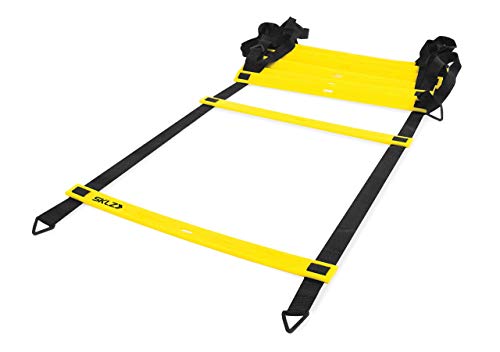
SKLZ Quick Ladder Running-equipment, 15-Feet US, Yellow
- Webby React Agility Trainer – a circular reactive trainer designed for high-intensity footwork and changing direction in a compact footprint.
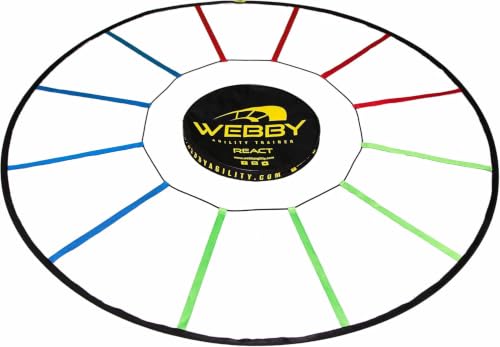
Webby React Agility Trainer – Circle Speed and Agility Ladder for High Intensity Reactive Footwork Drills and Skills – A Circular Piece of Reaction Training Equipment that Changes The Way You Move…
If you are still deciding between ladder and non-ladder tools, Alternative to Agility Ladder: Which Should You Choose? (2026) offers a wider comparison. For drill ideas that work on any ladder, see Ladder for Agility Drills: 12 Drills to Build Footwork and Quickness.
FAQ
Is the sklz reactive agility ladder good for basketball?
Yes, for footwork and change-of-direction work. The reactive setup encourages adjustments similar to those you make in games. It does not replace conditioning, so pair it with running or interval training.
Can I use it on an outdoor court?
You can, provided the surface is firm and reasonably clean. Sand, loose gravel or wet concrete makes the flat rungs slide, so secure the ladder or choose another surface.
How often should I train with it?
Most players benefit from three to four sessions a week of 10 to 15 minutes each. Short, frequent work tends to produce better results than a single long session.
Is it suitable for kids?
Yes, with supervision. Start with simple patterns and low speed, and focus on clean foot placement before adding reactive cues. Parents should check that the setup is stable and the area is clear.
Does it help with first-step quickness?
Owners commonly report better foot speed and balance over time, but results depend on consistency and what else is in your program. Pair ladder work with explosive starts from a stance for the most direct transfer.
Do I need the cones?
The cones are central to the reactive design. You can run ladder-only drills, but the reactive variety comes from the cones, so most buyers will use the full set.
How should I store it?
Roll or fold the ladder flat and keep the cones together in a bag or bin. Store indoors away from moisture to keep the rungs and cones in good shape.
Should I see a professional before starting?
If you have an existing injury, ankle instability or a medical condition, consult a physician, physical therapist or certified coach before starting high-intensity footwork work.
Final Verdict
The sklz reactive agility ladder is a practical, portable choice for basketball players who want reactive footwork without a large investment in space or gear. Its strength is the reactive cone design, which pushes you to adjust rather than repeat fixed patterns. Its limits are clear: it will not build endurance, it needs a firm surface, and its footprint suits guards and wings better than big post players. If you train consistently and pair it with conditioning, it earns a place in your routine.
View on Amazon
About Weston Reed
Weston focuses on practical advice for basketball endurance & training gear: what matters before you buy, what to skip, and how to get more out of what you already own.
About the author
Weston Reed writes reviews and buying guides for Basketball Marathon.